
No hot water: what to check before calling a plumber
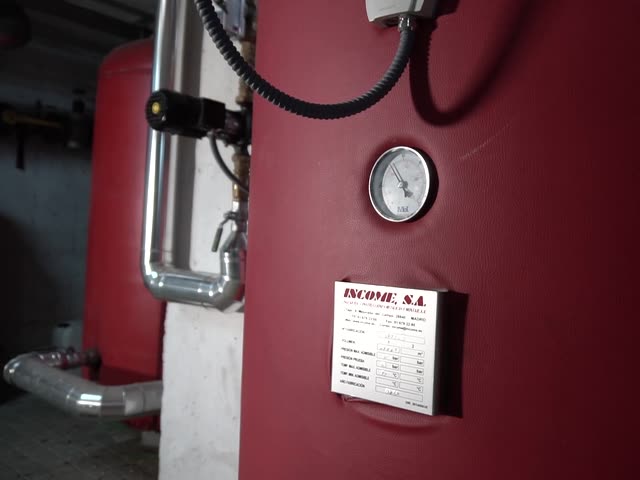
No hot water in the morning, a shower that stays cold: it's one of the calls I get most often. The good news is that sometimes it's just a setting. Here is what you can safely check yourself before you call me.
1. The water heater's circuit breaker
Open your fuse box (tableau électrique). The water heater usually has its own breaker, often labelled « chauffe-eau » or « cumulus ». If it is down (OFF), switch it back up.
If it trips again straight away, or as soon as the water heater starts, don't keep trying. That points to an electrical fault, often the heating element. Leave it off and call a professional.
2. The off-peak switch
If your electricity contract has peak and off-peak hours (heures pleines / heures creuses), your water heater only heats at night. It is controlled by a small switch in the fuse box: the day/night switch (contacteur jour/nuit). It often has three positions: « Auto », « I » (forced on) and « 0 » (off).
Check it hasn't been left on « 0 ». Then try a test: set it to « I » for about an hour. If the water starts heating again, the water heater itself is fine. The problem lies with the off-peak signal or the switch. Remember to set it back to « Auto » afterwards, or your water heater will also run during peak hours.
3. Holiday mode and the temperature setting
Some recent water heaters have a display with a « holiday », « absence » or « eco » mode. It's easy to forget to switch it off after a trip. Check the temperature setting too: 55 to 60 °C is the usual recommendation. Lower, the water heats poorly; much higher, limescale builds up faster.
4. The cold water supply
After works or a water cut, make sure the cold water valve feeding the water heater is open. It's on the lower pipe, just before the safety valve unit.
Still no hot water?
I repair electric water heaters between Théoule-sur-Mer and Beaulieu-sur-Mer. Tell me what you've already checked: it saves time for both of us.
Call +33 6 15 09 85 76What I advise you not to do yourself
You'll read online that you just need to remove the water heater's cover and press the safety thermostat's reset button. Behind that cover there are 230 volts, often with water close by. If that thermostat has tripped, it has detected a problem: overheating, a worn heating element, heavy limescale. Resetting it without finding the cause often only buys you a few days.
The same goes for testing with a multimeter: manufacturers themselves reserve this for people with electrical knowledge.
The safety valve: normal drip or leak?
The safety valve unit (groupe de sécurité) is fitted on the cold water inlet, with a small funnel underneath. It protects the tank from excessive pressure.
If it drips while the water is heating, that's normal: water expands as it heats. But if it runs all the time, even when the water heater isn't heating, it needs checking.
A maintenance tip from manufacturers: operate its knob or lever once a month, for a few seconds. This stops limescale from jamming it, especially if your water is hard.
When to call straight away
- Water is running under the tank or down its side: switch off the water heater's power, close its cold water supply and call. My article on what to do in case of a water leak will help while you wait.
- The breaker trips every time you switch it back on.
- The hot water comes out rusty, cloudy or with an unusual smell.
- The tank makes loud banging or whistling noises.
On the phone, I'll ask for the brand, the capacity (in litres, on the label) and what you've already tried. If a part is at fault, I'll tell you whether it's better to replace it or the whole appliance.